A three-airplane fleet
Each with its own registration, hours and history. If one is booked, another is in for an inspection and the third is in the shop, the club will loan you one if it needs to.
Career modes
Flying costs money. In Private Pilot Life, you pay for fuel, the hangar, insurance and the shop, and each career changes how you pay for them. Four difficulty levels set your budget, from Easy to Expert.
Three pilot lives
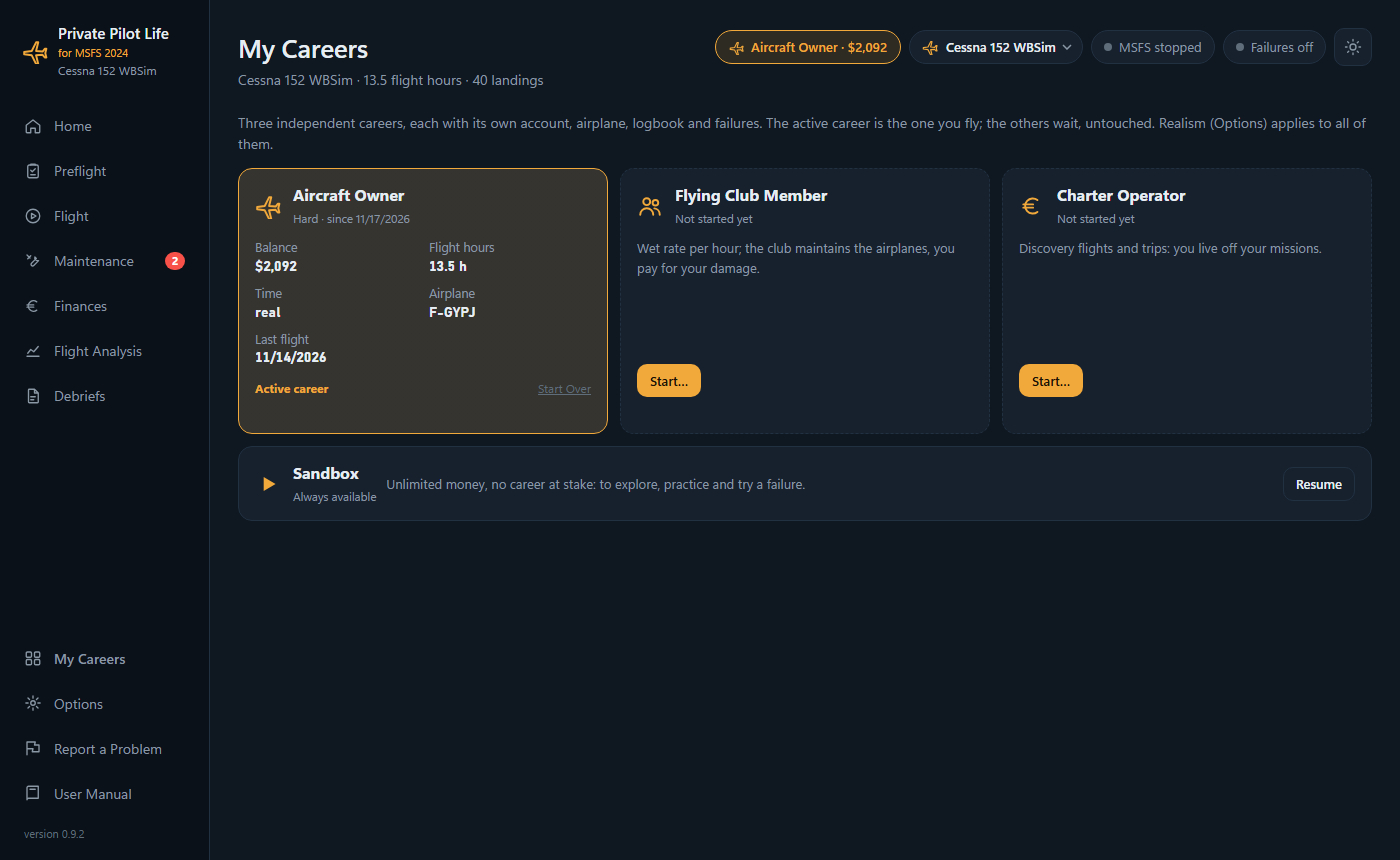
Aircraft owner, flying club member and charter operator run side by side. Each career has its own account, airplane, logbook and failures, and switching between them costs you nothing. To start one, you pick the difficulty and your airplane: brand new, mid-life or near TBO, with its actual wear left for you to discover.
Mode 1
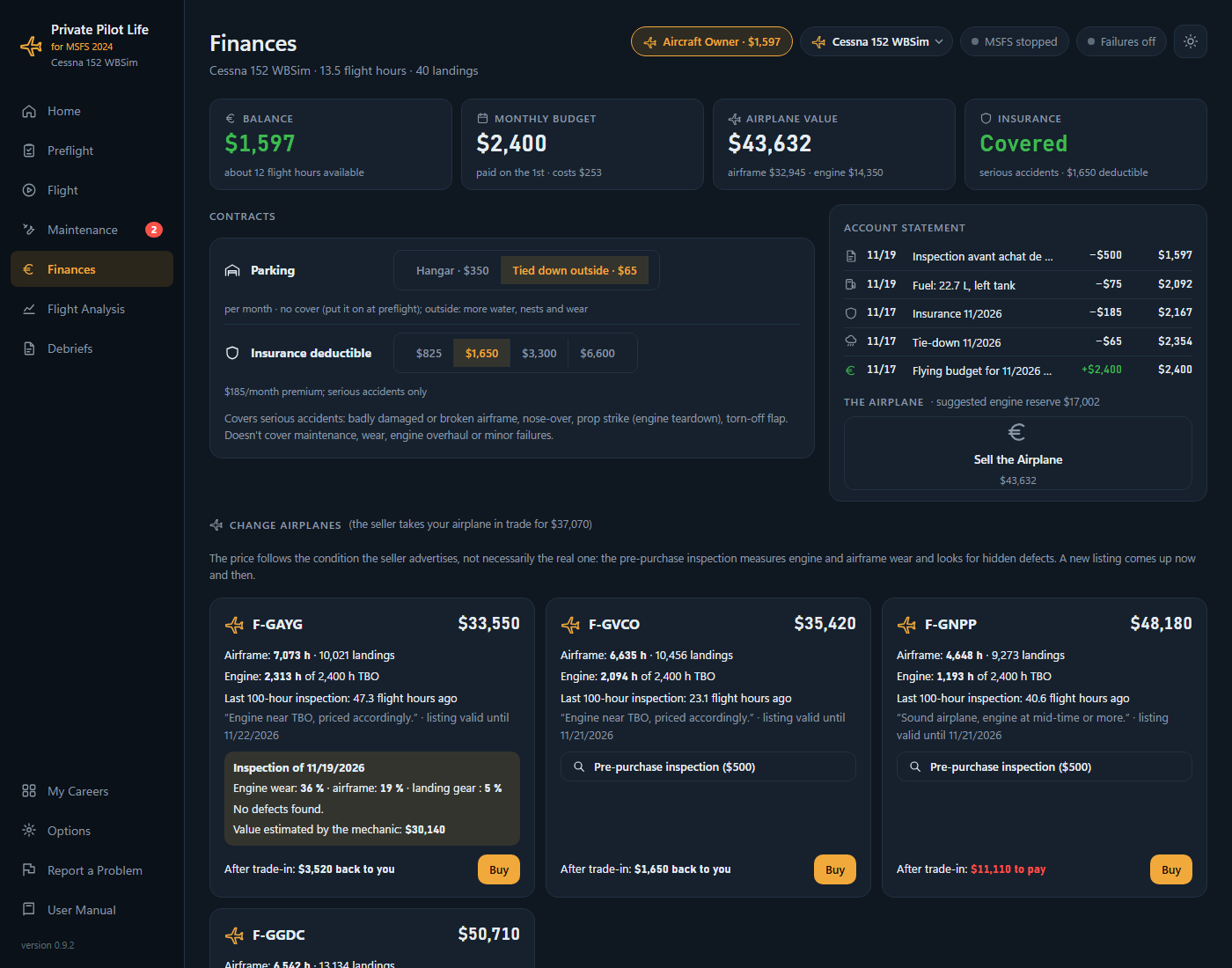
The airplane is yours. Every month a budget comes in, and out go the bills: hangar or tie-down, insurance, interest if you're overdrawn, and of course maintenance and repairs.
Mode 2
You pay by the hour plus annual dues; fuel and maintenance are included. But you share the airplanes with the other members, who aren't always careful and sometimes leave you an unpleasant surprise.
Each with its own registration, hours and history. If one is booked, another is in for an inspection and the third is in the shop, the club will loan you one if it needs to.
Between your flights, they fly too: hours, landings, and sometimes a hard landing, a flap overspeed or a forgotten pitot cover. Some report it, others don't.
You report it, the club fixes it. But damage you missed on your preflight, an abused engine or an unairworthy flight is on you, with a deductible.
Buy 10, 25 or 50 hours in advance for a 5 to 15% discount.
Mode 3
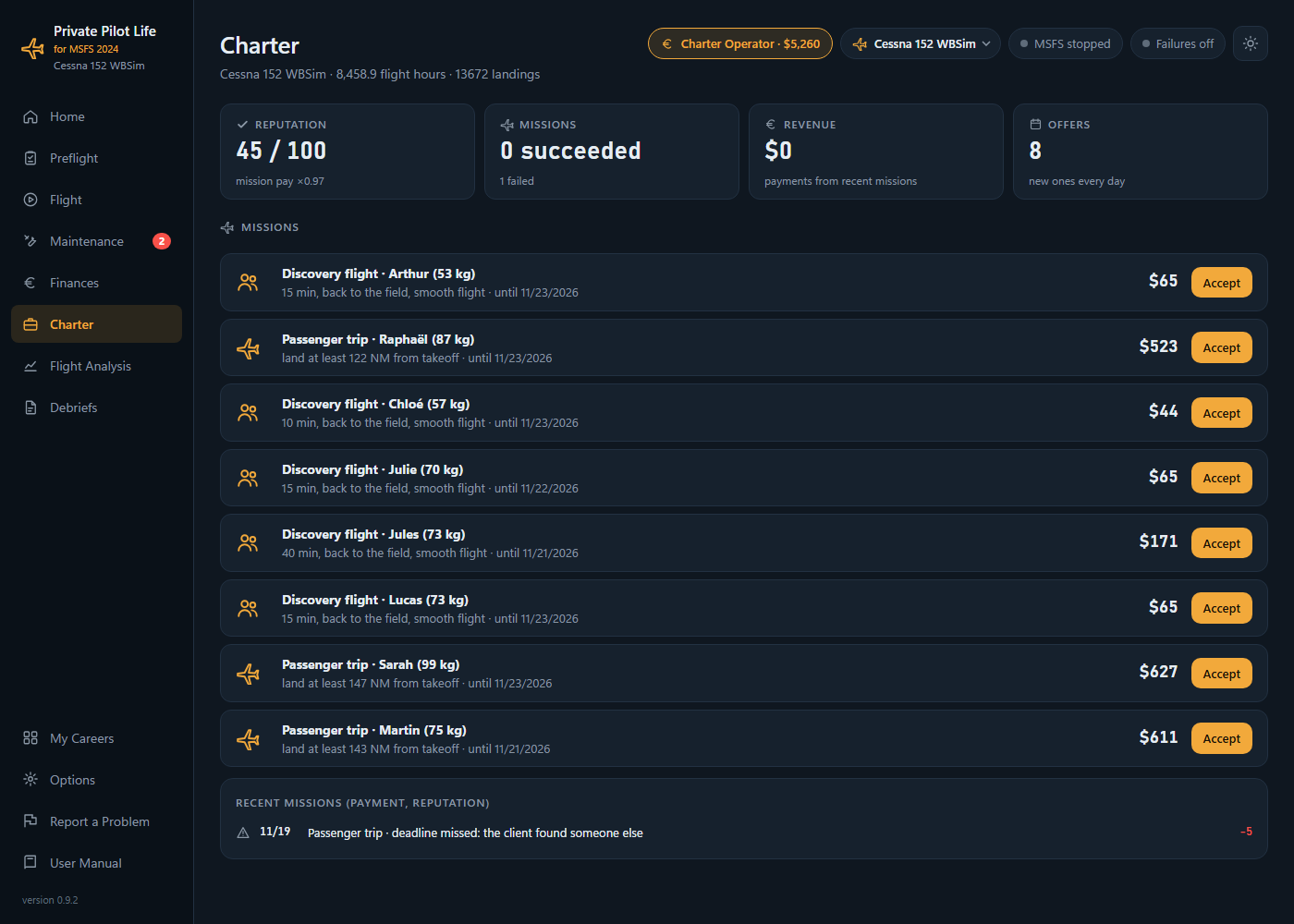
Fly your airplane to earn a living. New jobs come in every day, and the better your reputation, the more of them there are.
On the side
All the failures, wear, preflight and maintenance, but no bills. The perfect mode to explore, practice or try out a failure without touching your three careers. It's also the only place where you choose the engine's condition.
Buying and selling
A few listings come and go over the days. The price follows the advertised condition: freshly overhauled, good, average, near TBO. Watch out: some sellers advertise "good condition" when it's anything but, and a defect may be hidden.
For a few hundred dollars, the mechanic measures the engine and airframe, finds the defects and tells you what the airplane is really worth.
Your current airplane is taken in at part of its value to help pay for the next one.
After a sale or a repossession, buy an airplane with the money you have left.