Your mechanic
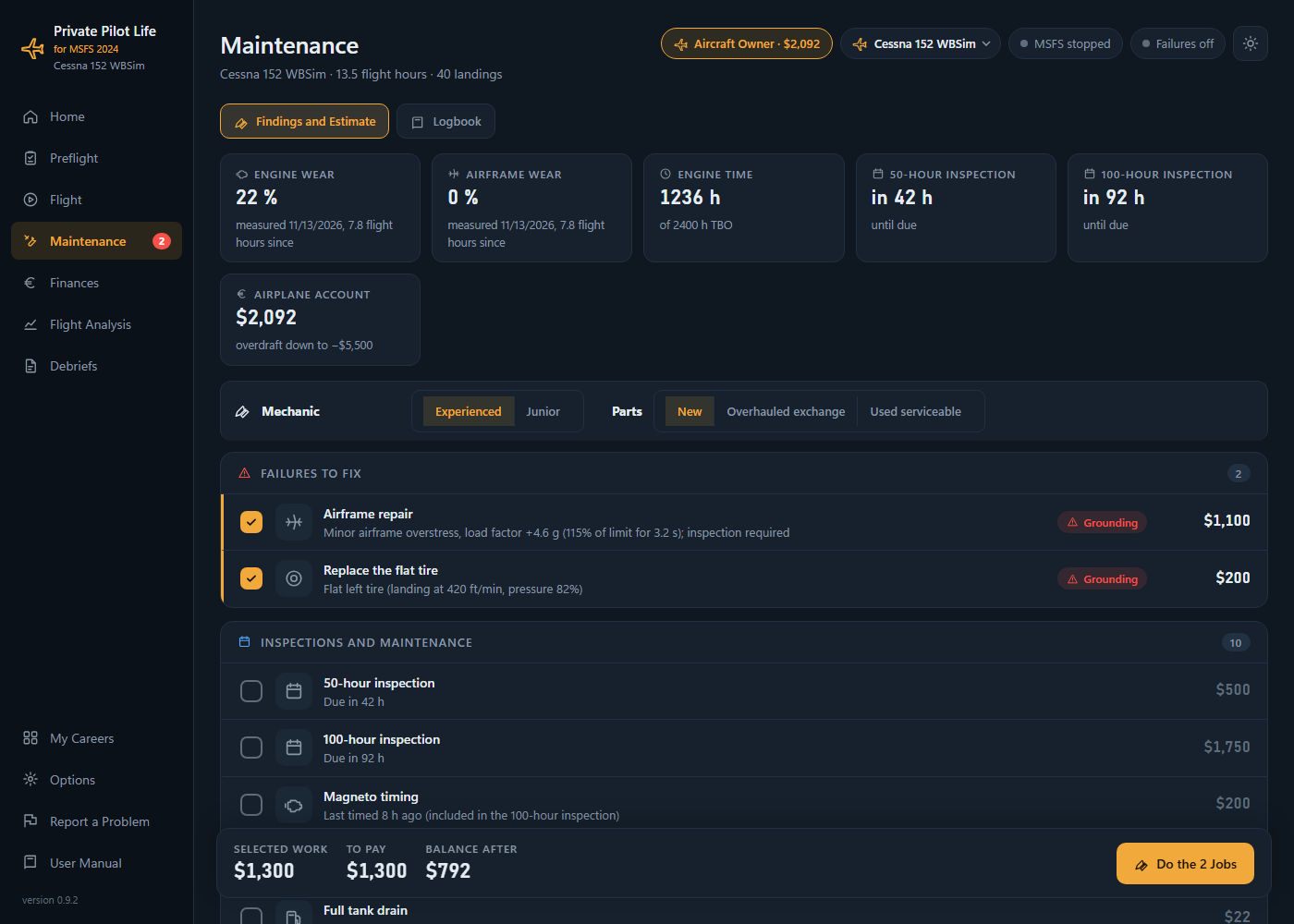
Experienced: costs more, and nothing gets past them.
Junior:
a lot cheaper, but sometimes misses a problem, and now and then a repair doesn't hold.
Maintenance
After the flight, the airplane goes to the shop. Your mechanic writes up the findings and hands you an estimate, and the call is yours: fix everything now, defer what can wait, or take a chance on a used part.
Your choices
Experienced: costs more, and nothing gets past them.
Junior:
a lot cheaper, but sometimes misses a problem, and now and then a repair doesn't hold.
New, overhauled exchange (cheaper, a little less reliable) or used serviceable (much cheaper, but of unknown age and more often defective).
Every squawk is tagged Grounding or Can wait. Fly with a known grounding squawk and you're flying an unairworthy airplane: your insurance no longer covers you, and the airplane loses value.
Scheduled maintenance
The flight debrief tells you when an inspection is overdue. Old oil wears the engine out much faster.
The engine
Two different numbers. Engine time is its hours since new or since its last major overhaul (2,400-hour TBO on the C152). Wear is its mechanical condition, and that's what drives power, oil consumption and temperatures. A well-maintained engine wears slowly; an abused one wears out in no time.
You can't read wear off a gauge. You know it from inspections, along with the date and the flight hours since the last measurement.
The logbook
Every flight and every shop visit goes in: duration, landings, fuel, work done, cost. The logbook exports to a spreadsheet.
In Sandbox, you choose the engine's condition: new, mid-time, near the end of its life… or "unknown," for practice. In your careers, it only changes through wear and the shop.
Aircraft owner, flying club member or charter operator: money changes everything.